Special Session 3:
Medical Image Semantic Segmentation and Object Detection
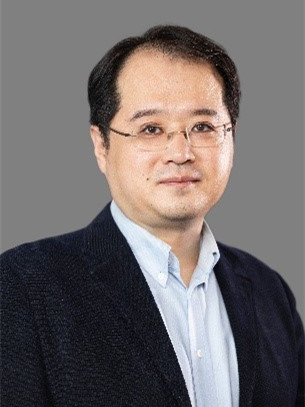
Xiaodong XU, Beijing University of
Posts and Telecommunications, China
Xiaodong XU is currently a tenure
professor of Beijing University of Posts
and Telecommunications. His research
area covers mobile networking theory,
semantic communication system and trial
systems. He accomplished the 4G and 5G
trial networks with several awards, such
as the first-class S&T award of China
Institute of Communications. The 6G
prototype he developed in 2021 was
recognized as the “industry-leading”
platform. He is an expert of IMT-2030
promotion group and CIC Fellow, IEEE
Senior Member.
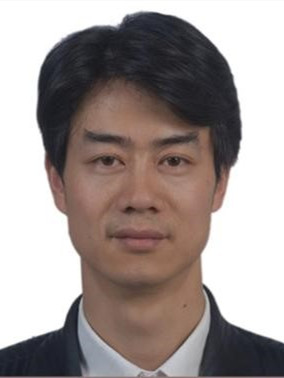
Yimu
Ji,
Nanjing
University
of
Posts
and
Telecommunications,
China
Yimu
Ji
is
a
Professor
and
Ph.D.
supervisor
at
the
School
of
Computer
Science,
School
of
Software,
and
School
of
Cyberspace
Security,
Nanjing
University
of
Posts
and
Telecommunications,
China.
He
is
Deputy
Director
of
the
Institute
of
High
Performance
Computing
and
Big
Data
Processing
and
Executive
Deputy
Director
of
the
Jiangsu
Engineering
Research
Center
for
High
Performance
Computing
and
Intelligent
Processing.
His
research
covers
high-performance
computing,
cloud
computing,
big
data,
artificial
intelligence,
the
Internet
of
Things,
and
cybersecurity.
His
interests
include
parallel
algorithms,
data
analytics,
domain-specific
large
models,
model
optimization,
and
security
for
intelligent
devices
and
networks.
He
has
led
or
participated
in
national
and
provincial
research
projects
and
has
published
in
journals
and
conferences
spanning
intelligent
computing,
information
processing,
and
security.
He
was
a
visiting
scholar
at
the
University
of
Virginia
in
2012
and
Purdue
University
in
2015.
His
work
connects
computing
infrastructure
and
intelligent
algorithms
with
applications
in
industry.
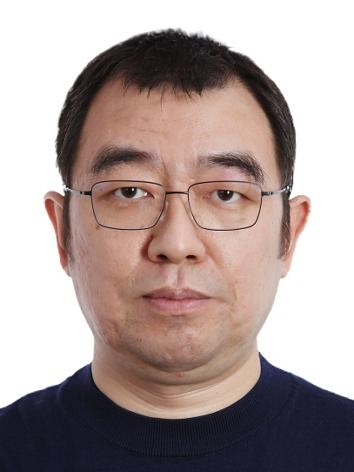
Zhi
Liu,
School
of
Information
Science
and
Engineering,
Shandong
University,
China
Zhi
Liu
(Member,
IEEE)
received
the
Ph.D.
degree
from
the
Institute
of
Image
Processing
and
Pattern
Recognition,
Shanghai
Jiao
Tong
University
in
2008.
He
is
currently
a
Professor
with
the
School
of
Information
Science
and
Engineering,
Shandong
University.
He
is
also
the
Head
of
the
Intelligent
Information
Processing
Group.
His
current
research
interests
are
intelligent
computing,
medical
images
in
the
neurosciences,
multimodal
human
computer
interaction,
remote
sensing
image
processing,
content-based
image
retrieval,
semantic
modeling,
and
data
mining,
etc.
Ke
Han,
Institute
of
Forensic
Science
of
China,
China
Ke
Han
received
the
bachelor's
degree
in
electronics
and
information
technology
from
Shandong
University,
Jinan,
China,
in
2021,
the
master's
degree
in
signal
and
information
processing
from
Shandong
University,
Jinan,
China,
in
2024,
and
the
doctor's
degree
in
signal
and
information
processing
from
Nanjing
University
of
Posts
and
Telecommunications,
Nanjing,
China,
in
2007.
Since
2007,
he
has
worked
in
Institute
of
Forensic
Science
of
China,
Beijing,
China,
and
is
currently
a
researcher
with
full
senior
professional
title.
His
research
interests
concern
artificial
intelligence,
image
processing,
pattern
recognition,
object
detection,
etc.
Submission Link (Enter the submission system
and select Special Session 3 )
Overview:
Medical image segmentation and object detection are fundamental tasks in computer-assisted image analysis, supporting the delineation of organs, tissues, and lesions and the localization of abnormal regions. These tasks remain challenging because of ambiguous boundaries, low contrast, substantial variations in target size, limited expert annotations, and differences across imaging devices and clinical centers. This special session focuses on methods for semantic segmentation and object detection in medical images, including CT, MRI, ultrasound, and digital pathology. It welcomes research on learning with limited annotations, weakly supervised and semi-supervised methods, few-shot learning, and domain adaptation across datasets and institutions. Other topics include multimodal image fusion, anatomical and boundary priors, small-lesion detection, and joint segmentation and detection. Contributions addressing two-dimensional and three-dimensional image analysis, lightweight architectures, and computationally efficient inference are also encouraged. The session invites original algorithms, application studies, and benchmark evaluations that investigate practical challenges in medical image processing. Authors are encouraged to assess segmentation accuracy, detection sensitivity, false-positive rates, and robustness using appropriate datasets and reproducible protocols. Cross-dataset or multicenter validation is particularly welcome to examine generalization beyond a single acquisition setting. The session aims to facilitate focused discussion on accurate, efficient, and robust medical image segmentation and detection.
Related topics for this special
session (but not limited to) :
1. Weakly supervised,
semi-supervised, and few-shot
semantic segmentation of medical
images
2. Object detection, lesion
localization, and small-lesion
detection in medical images
3. Domain adaptation and
generalization across imaging
devices and clinical centers
4. Multimodal medical image fusion
and modeling with anatomical and
boundary priors
5. Lightweight methods and
evaluation for 2D and 3D medical
image segmentation and detection