Special Session 2:
Image segmentation
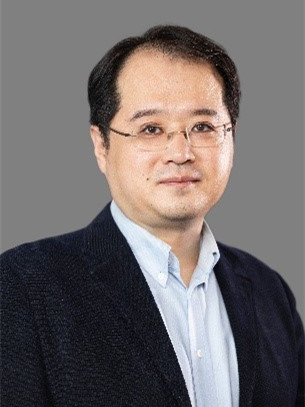
Xiaodong XU, Beijing University of
Posts and Telecommunications, China
Xiaodong XU is currently a tenure
professor of Beijing University of Posts
and Telecommunications. His research
area covers mobile networking theory,
semantic communication system and trial
systems. He accomplished the 4G and 5G
trial networks with several awards, such
as the first-class S&T award of China
Institute of Communications. The 6G
prototype he developed in 2021 was
recognized as the “industry-leading”
platform. He is an expert of IMT-2030
promotion group and CIC Fellow, IEEE
Senior Member.
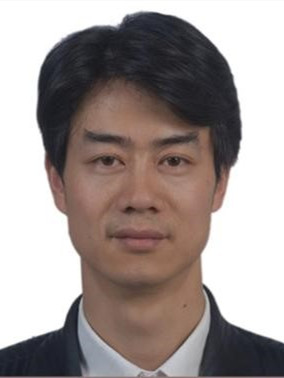
Yimu
Ji,
Nanjing
University
of
Posts
and
Telecommunications,
China
Yimu
Ji
is
a
Professor
and
Ph.D.
supervisor
at
the
School
of
Computer
Science,
School
of
Software,
and
School
of
Cyberspace
Security,
Nanjing
University
of
Posts
and
Telecommunications,
China.
He
is
Deputy
Director
of
the
Institute
of
High
Performance
Computing
and
Big
Data
Processing
and
Executive
Deputy
Director
of
the
Jiangsu
Engineering
Research
Center
for
High
Performance
Computing
and
Intelligent
Processing.
His
research
covers
high-performance
computing,
cloud
computing,
big
data,
artificial
intelligence,
the
Internet
of
Things,
and
cybersecurity.
His
interests
include
parallel
algorithms,
data
analytics,
domain-specific
large
models,
model
optimization,
and
security
for
intelligent
devices
and
networks.
He
has
led
or
participated
in
national
and
provincial
research
projects
and
has
published
in
journals
and
conferences
spanning
intelligent
computing,
information
processing,
and
security.
He
was
a
visiting
scholar
at
the
University
of
Virginia
in
2012
and
Purdue
University
in
2015.
His
work
connects
computing
infrastructure
and
intelligent
algorithms
with
applications
in
industry.
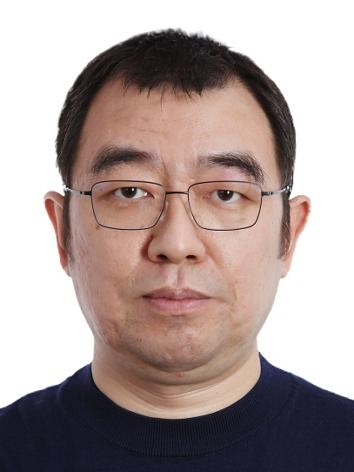
Zhi
Liu,
School
of
Information
Science
and
Engineering,
Shandong
University,
China
Zhi
Liu
(Member,
IEEE)
received
the
Ph.D.
degree
from
the
Institute
of
Image
Processing
and
Pattern
Recognition,
Shanghai
Jiao
Tong
University
in
2008.
He
is
currently
a
Professor
with
the
School
of
Information
Science
and
Engineering,
Shandong
University.
He
is
also
the
Head
of
the
Intelligent
Information
Processing
Group.
His
current
research
interests
are
intelligent
computing,
medical
images
in
the
neurosciences,
multimodal
human
computer
interaction,
remote
sensing
image
processing,
content-based
image
retrieval,
semantic
modeling,
and
data
mining,
etc.
Ke
Han,
Institute
of
Forensic
Science
of
China,
China
Ke
Han
received
the
bachelor's
degree
in
electronics
and
information
technology
from
Shandong
University,
Jinan,
China,
in
2021,
the
master's
degree
in
signal
and
information
processing
from
Shandong
University,
Jinan,
China,
in
2024,
and
the
doctor's
degree
in
signal
and
information
processing
from
Nanjing
University
of
Posts
and
Telecommunications,
Nanjing,
China,
in
2007.
Since
2007,
he
has
worked
in
Institute
of
Forensic
Science
of
China,
Beijing,
China,
and
is
currently
a
researcher
with
full
senior
professional
title.
His
research
interests
concern
artificial
intelligence,
image
processing,
pattern
recognition,
object
detection,
etc.
Submission Link (Enter the submission system
and select Special Session 2 )
Overview:
Image segmentation methods based on
artificial intelligence (AI) have made
rapid development. However, under
strongly-supervised learning of deep
learning networks, it is necessary to do
a lot of manual pixel-level feature
annotation for images in some training
datasets. The work of manually
annotating image features is
time-consuming, laborious, and
susceptible to subjective influences.
Images collected by different types of
image acquisition devices have
inconsistent feature distribution, which
leads to the decline of generalization
ability of deep learning networks under
strongly-supervised learning. In order
to solve the problems of manual
pixel-level feature annotation and the
decline of network generalization
ability, image segmentation methods
based on weakly-supervised learning,
few-shot learning, transfer learning and
source-target domain alignment, etc.,
have become one of the hot topics in
current research. The purpose of these
methods is to realize image segmentation
under the condition of a small number of
manual annotation or even no annotation
of image features, and the segmentation
effect is close to or even reach the
effect of segmentation under the
condition of strongly-supervised
learning. In addition, deep learning
networks should have certain
generalization ability in image
segmentation.
This special session considers
approaches related to these aspects.
Related topics for this special
session (but not limited to) :
1. Image segmentation under
few-shot learning,
2. Image segmentation across
source-target domains,
3. Image segmentation assisted by
multimodal large models,
4. Image segmentation based on
lightweight deep learning networks,
5. Image segmentation based on
deep learning networks under prior
constraints.